
Title: Agentic edge intelligence: Past, present and future
This keynote examines how edge intelligence is evolving into agentic edge intelligence, an emerging paradigm in which autonomous AI agents negotiate computation, data, and services across the computing continuum. Building on advances in wireless edge learning, distributed inference, and small-model agent architectures, the talk integrates contributions from the Future Computing Group on semantic interoperability, federated optimisation, event-driven negotiation, and continuum-native control. These results illustrate how local perception and actuation combine with global reasoning to enable real-time AI economies in which agents act as economic and computational actors. The keynote concludes by outlining the central challenges that must be solved to realise accountable and efficient agentic ecosystems at scale.
Lauri Lovén, Assistant Professor (tenure track), is a PI and the vice director of the Center for Ubiquitous Computing (UBICOMP), University of Oulu, in Finland. He leads the Future Computing Group of ca. 20 researchers and coordinates the Distributed Intelligence strategic research area in the national 6G Flagship research program. He received his Title of Docent (edge intelligence) and D.Sc. (Tech.) at the university of Oulu in 2025 and 2021, respectively. He was with the Distributed Systems Group, TU Wien, in 2022, and visited the Integrated Systems Laboratory at the ETH Zürich in 2023. He’s an associate editor at the SpringerNature Computing journal. His team studies future generation computing in the IoT-edge-cloud continuum, focusing on the theory and applications of edge intelligence. He has co-authored 2 patents and ca. 80 research articles in international journals, conferences, workshops, and white papers and has 2 patents. Before and during his academic career he has worked ca. 20 years in software industry, primarily with AI startups, as founder, CTO, board member, advisor and mentor, among other roles.
Scaling Brain-Inspired Edge Computing
Edge computing increasingly hosts AI pipelines that must be low-latency, energy-aware, and resilient at geo-distributed scale. These pipelines face bursty sensor activity, intermittent networks, and strict power budgets, so scalability depends on event-aware runtimes and fine-grained power management. Neuromorphic computing promises event-driven models and hardware inspired by the brain, which can be a practical path to real-time intelligence at low power. Using our case studies for environmental and critical-infrastructure monitoring, I will demonstrate how the no-spike/no-compute property enables energy-proportional sensing, how local edge inference maintains bounded latency, and how intermittent links are handled through staleness-tolerant synchronization and lightweight updates. I will also discuss partitioning spiking neural networks across the computing continuum and the tradeoffs between latency, energy, and resilience under link outages. The talk argues that neuromorphic computing is not only a hardware story, but also a systems story about scalable placement, caching, and control in the edge-cloud fabric.
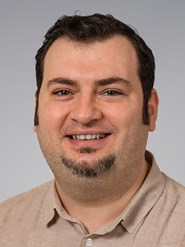
Atakan Aral is a tenure-track Assistant Professor for Information Systems Engineering at the Faculty of Computer Science, University of Vienna. His research focuses on resource management across the edge-cloud continuum, with a particular emphasis on edge AI and sensor networks. He is a pioneer in edge AI, advancing hierarchical and personalized federated learning and developing practical model-partitioning techniques that turn monolithic neural networks into latency- and energy-aware pipelines across devices, edge nodes, and the cloud. Currently, he leads efforts to deploy learning-enabled monitoring in large-scale rural settings with scarce power and intermittent connectivity. He conducts interdisciplinary research through international collaborations, for example, EIC Pathfinder projects SWAIN and TROCI. He received a dual MSc degree in Computer Science and Engineering from Politecnico di Milano (2011) and Istanbul Technical University (2012), and a PhD in Computer Engineering from Istanbul Technical University (2016).